

© 2026 Fernanda Monsalve. This site uses analytics tools to understand visitor behaviour.



Go back
UNIQLO®
Retail

Summary
From a browsing-heavy app into a conversion-oriented system: redesigned e-commerce experience by addressing structural UX failures that blocked purchase behavior.
Through user research and behavioral analysis, I identified that users interacted but failed to complete purchases due to poor findability, fragmented navigation, and friction in checkout flows.

Important:
The author and the named institution have no relationship or benefit from the content of this project. This project relies on public and free information. This project has been carried out for educational purposes only.

The Problem
Born in the 80s in Japan, UNIQLO arrived in Europe in the late 2000s. The giant Nippon has become one of the most viral clothing brands thanks to high-quality items, affordable prices, and attractive, unique functional features.
Despite UNIQLO’s strong brand presence and product quality, the Spanish app showed low adoption, poor reviews, and near-zero purchase conversion. The app was not failing to attract users but failing to convert them.
Regular purchase path and common friction points
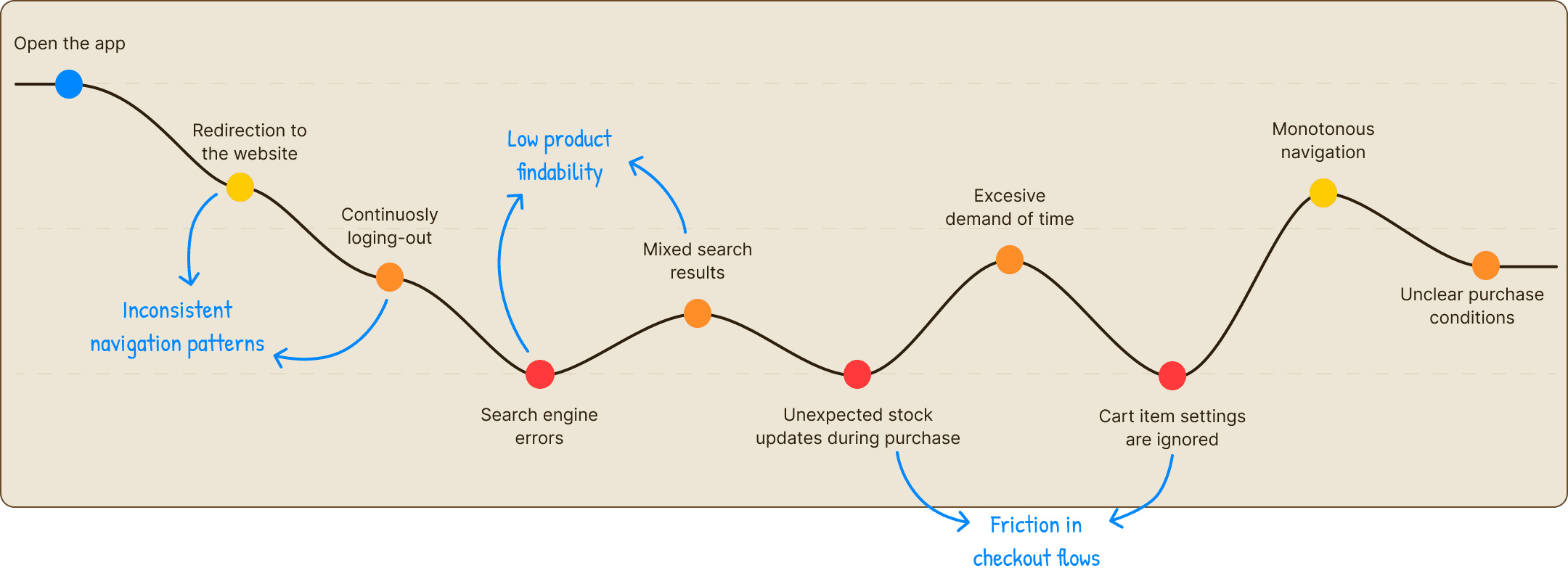
During the interviews in the early stages of the research, users revealed the path they followed every time they interacted with the app. The overall opinion described 70% of the interactions as negative, including the core flows.

Insights
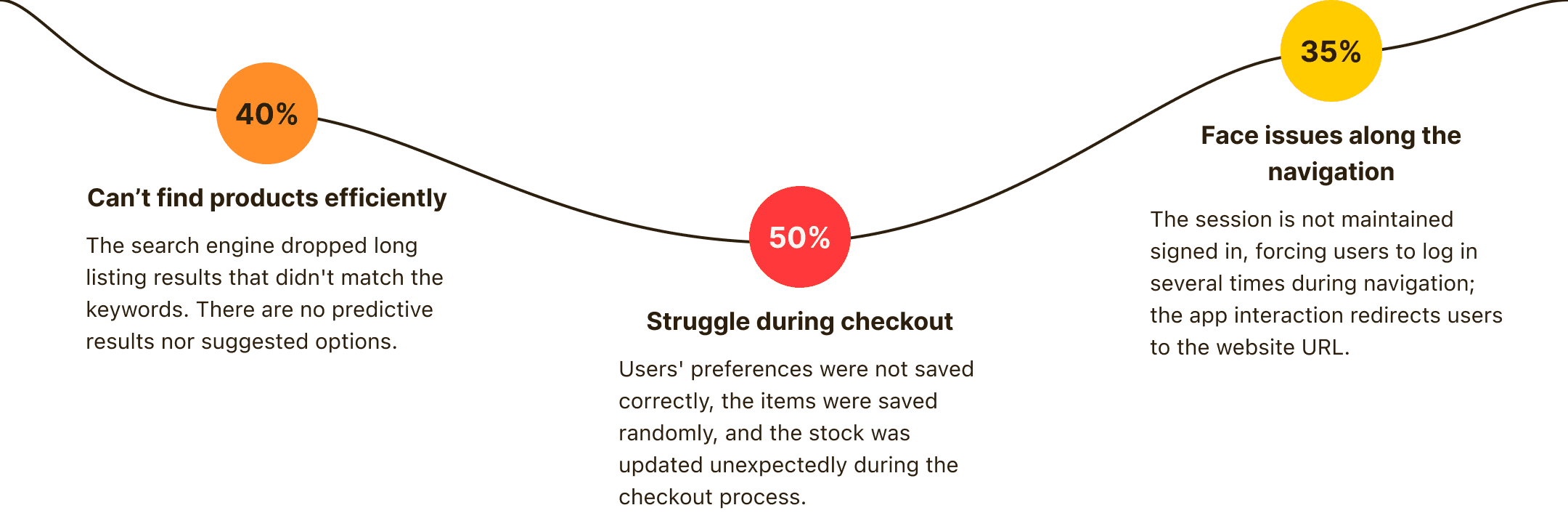
From different research strategies, I defined different angles to approach the problem: behavioral and structural. Both the problem and the solution were made clear by comprehending the users' mental model.
Research Methods
Comparative Benchmarking ∙ Moderated Interviews ∙ User Surveys ∙ Usability Evaluation
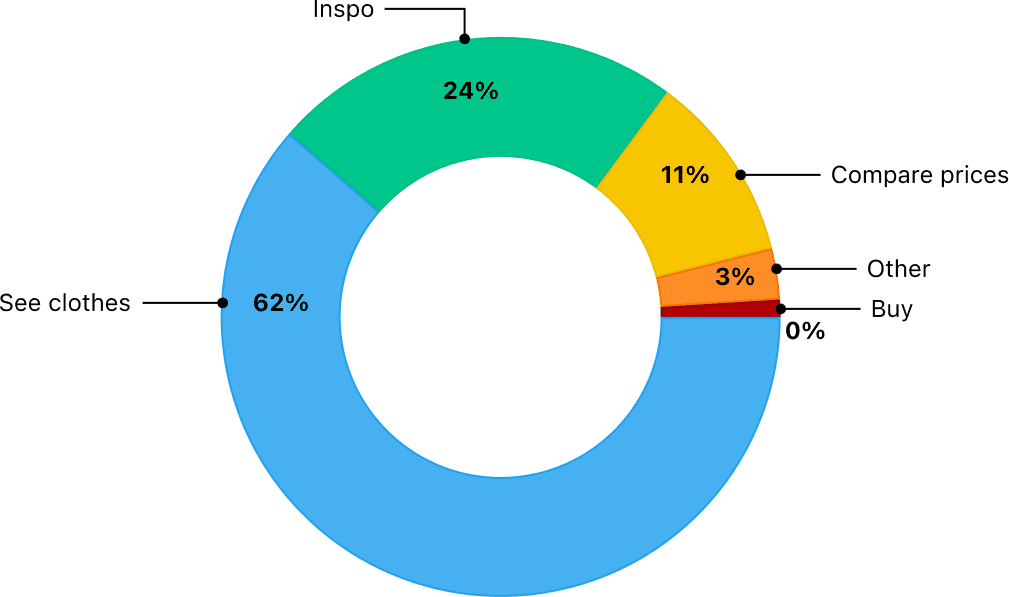
Users' approach reveals that UNIQLO’s Spanish e-commerce app experience prioritized browsing over buying. Users are familiar with the checkout process, yet none of them felt comfortable proceeding with the purchase in the way they did by browsing the app.

Solution
With only 6 physical stores concentrated in 2 main cities, the app represents a critical channel for national reach and growth. Improving the app was going beyond a UX initiative: a business opportunity to unlock digital sales and compete with leading industry representatives, like Inditex.
The main goal is to promote safety, comfort, and build a bridge to reduce geographic distance.
Ideation Methods
Empathy Map ∙ Journey Map ∙ Affinity Diagram ∙ Card Sorting
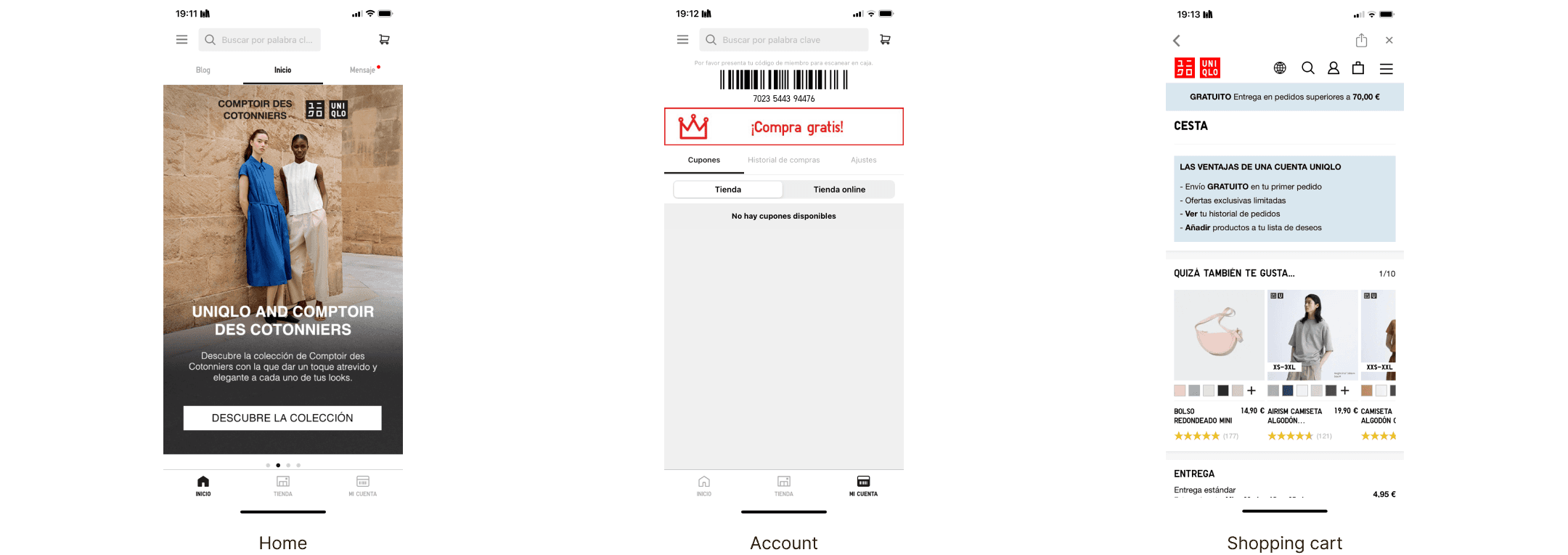
Original Version
Redesigned Version
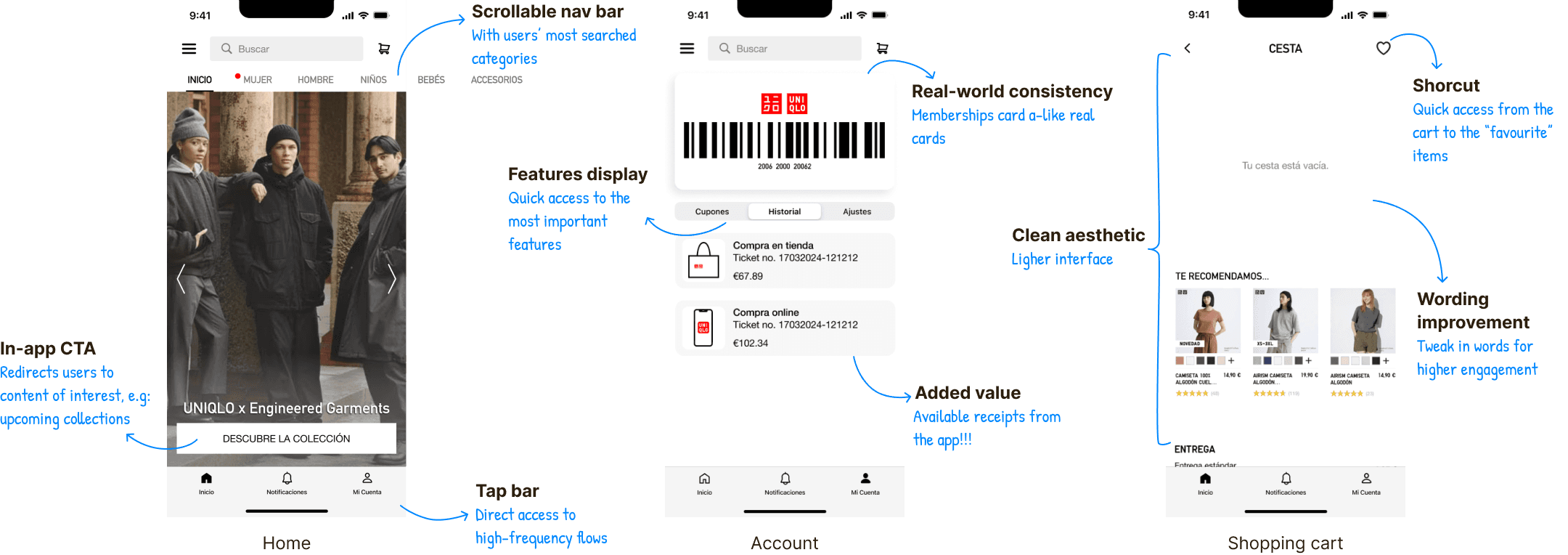

Outcome
Deliverables
Users Behavioral Reports ∙ Wireframes Library ∙ Functional Prototype ∙ Heuristic Report
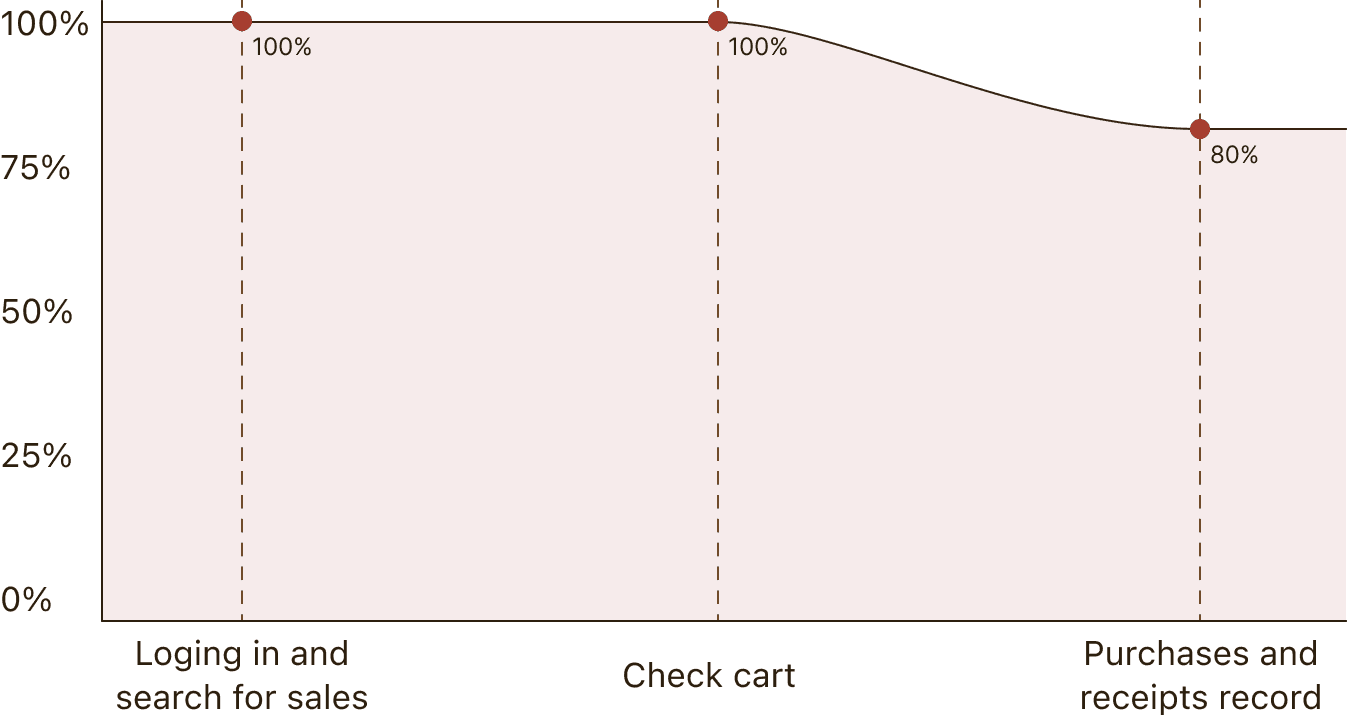
Usability testing showed 100% task completion across defined flows, with users reporting significantly improved clarity and ease of navigation.
The time taken per task decreased by 95%, and the NPS increased to 100%.
The users not just understood the assigned tasks, but also cherished how easy it was to find what they were looking for. The friction during navigation was mitigated with clarity and structure.
No inconveniences were reported during the interaction.
“Everything is very specific and easy to find.”

Key Constraints and Trade-off

Simplicity on Purpose
Simplicity is a characteristic that distinguishes Japanese culture. To highlight what makes UNIQLO's offer different from the average retail store, it was key to avoid trends, visual noise, and unnecessary complexity, despite the possibility of lessening the approach to new targets.

Brand First
To correctly transmit the brand values takes time in a high-speed industry, but it is worth the effort of making it a long-lasting product. By extrapolating the brand’s core values to the user experience, the product elevates its roots: high-quality, functionality, and simplicity.

Feasibility Focus
Different constraints could have been solved during the project, such as valuable features or brand awareness; however, without addressing key issues like inconsistent navigation, friction points, or product findability, there was no possibility of facing different challenges.

Thoughts
The Spanish version of UNIQLO's application has been updated since then; however, users still think there is work to be done on the user experience suite. New releases have taken into account product findability and consistency between this app and versions for other countries; soon enough, the whole experience will be fully adapted to the Spanish target.