

© 2026 Fernanda Monsalve. This site uses analytics tools to understand visitor behaviour.



Go back
BBVA®
Fintech

Summary
Optimized banking app experience through research-led IA redesign, reducing task time by 63% and increasing NPS to 100%.
Through user interviews, heuristic analysis, and journey mapping, I identified structural friction in high-frequency banking flows. The solution focused on transforming a complex interface into a high-performance minimalist fintech experience, where usability and accessibility are at the core of the new product.

Important:
The author and the named institution have no relationship or benefit from the content of this project. This project relies on public and free information. This project has been carried out for educational purposes only.

The Problem
BBVA is one of the core banks in Europe, Asia, and South America, with up to 75 million active clients worldwide. Their wide range of worldwide products includes corporate banking, investment, and international expansion.
The mobile app is their immediate connection with users, an experience that creates friction in high-frequency tasks such as transfers and account management. Users struggled to locate key actions quickly, leading to longer task times and lower perceived usability.
Research Methods
Comparative Benchmarking ∙ Moderated Interviews ∙ User Surveys ∙ Heuristic Evaluation
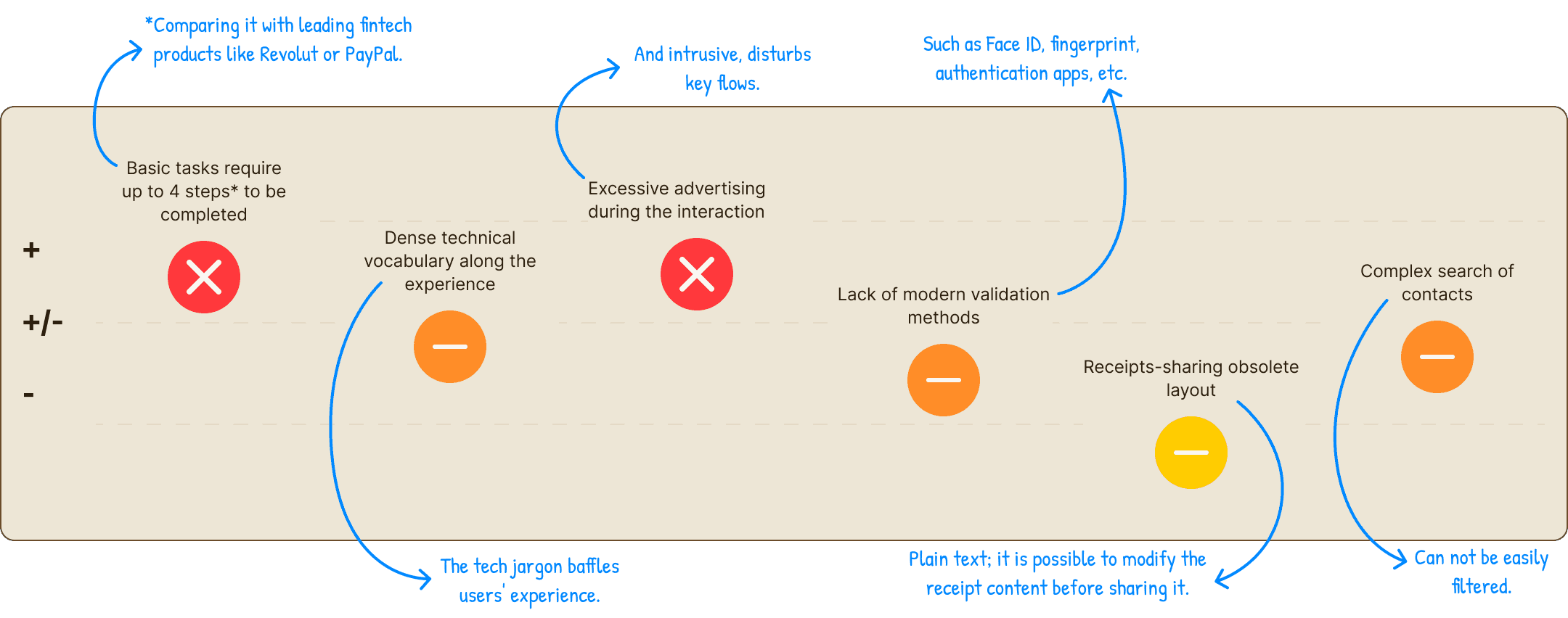
Users’ most common friction points

Insights
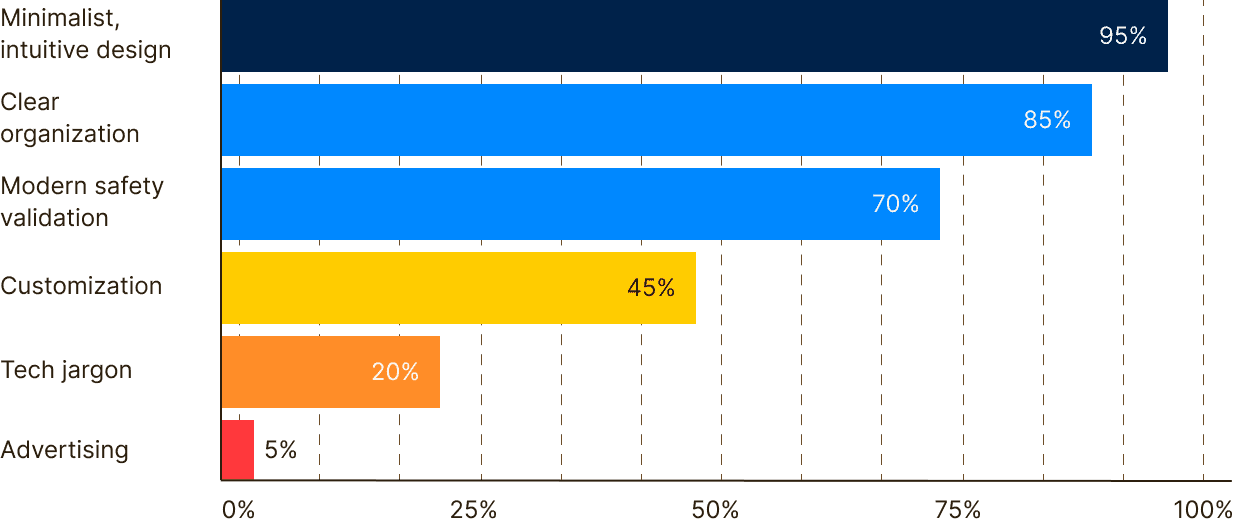
Up to 30 users from BBVA and other banking products participated in the research at various stages.
Before proceeding with any solution, I evaluated the opinions from users who actively manage their finances through digital products. They rated as essential features intuitive design, clear organization, and modernity in safety matters.
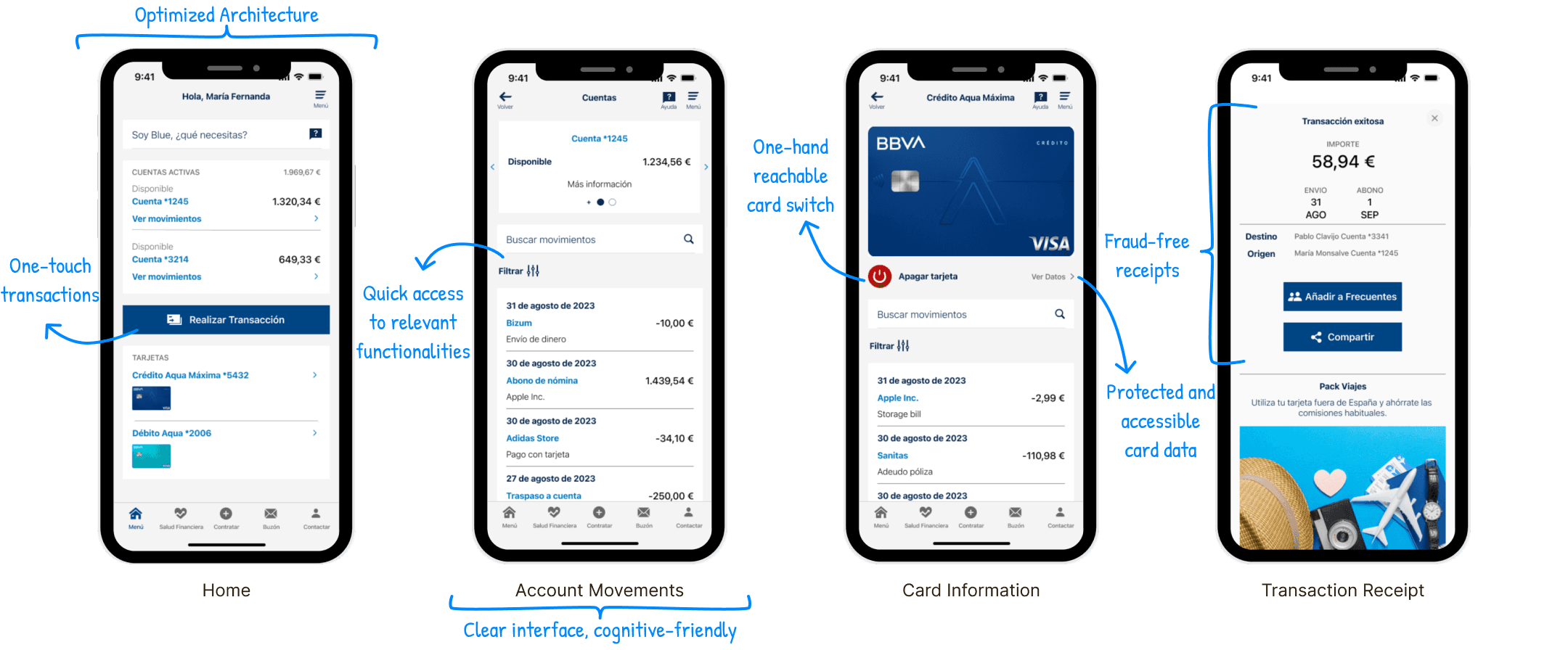
To deliver a high-performance, competitive financial product, I decided to incorporate features that instantly upgrade the original version into an intuitive and accessible fintech experience.
BBVA users’ quotes
The app is too hard to understand.
I had to learn how to use the app over the years through daily use.
While traveling, I can't confirm new transactions because I don't receive the SMS code.
If I had another banking app, I would use it instead.
I always ignore the ads.
Finance products are already complicated; yet, neo-banks have successfully stood out over traditional banking by having the user at the center of their decisions. The goal was not to reinvent BBVA as a neo-bank, but to strengthen clarity and accessibility while preserving its core values: trust, responsibility, and integrity.

Solution
Ideation Methods
Lean UX Canvas ∙ Tree Testing ∙ MFVD ∙ Forced Associations ∙ UX Writing
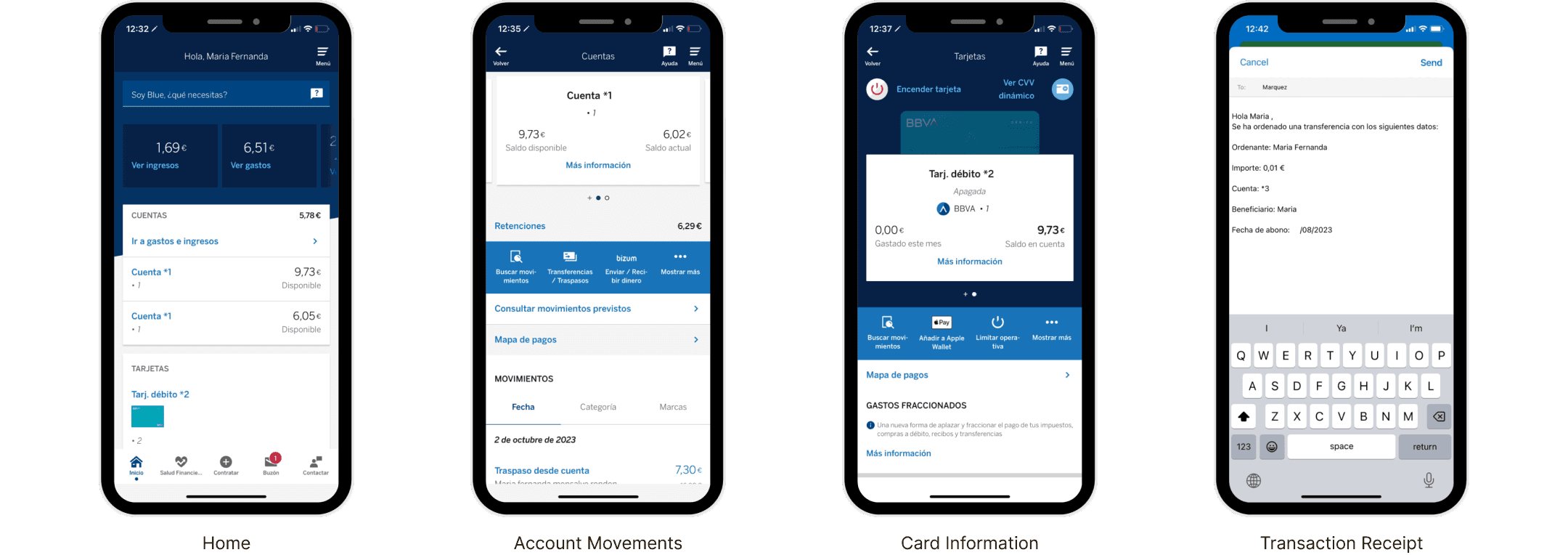
Original Version
Upgraded Version

Outcome
The strategy was to pick the most used flows, improve the experience, and test them out. When comparing the usability test performance from both rounds, it was clear how urgent the solution implementation was.
Usability Testing Results
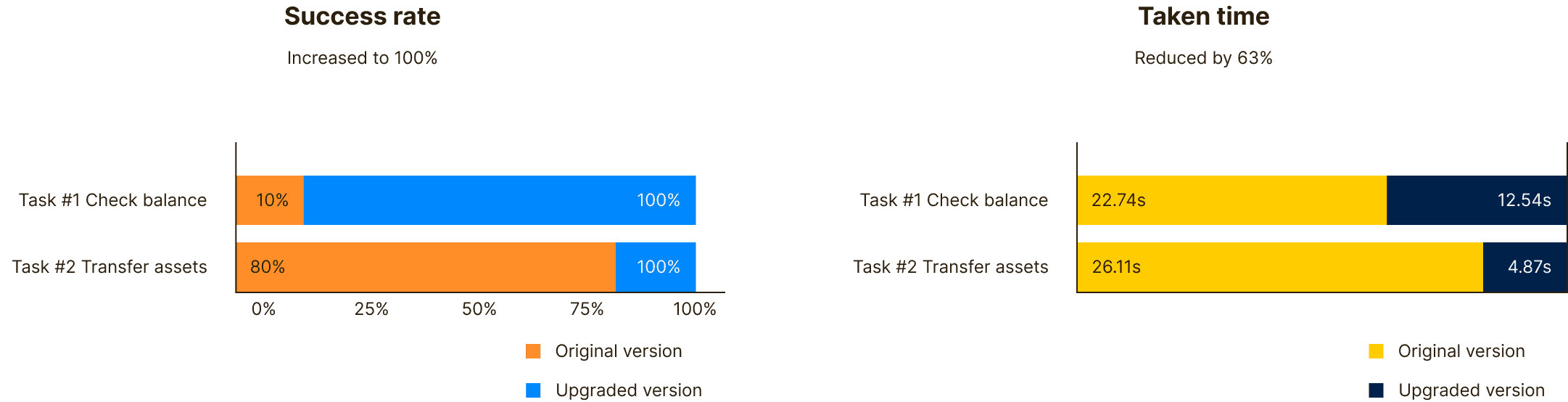
The upgraded version's performance fits as expected, increasing the success rate and reducing the time taken per task, which is highly important in financial environments, where friction equals desertions. The implemented enhancements are meant to improve the product performance, deliver an accessible experience, and contribute to the users' retention, which translates into trust, loyalty, and promotion.
Deliverables
Wireframes Library ∙ Functional Prototype ∙ Design System ∙ UX Report ∙ UX Writing Guide

Trade-off
Improving a traditional financial product required prioritizing structural improvements while respecting business, regulatory, and behavioral constraints.

Brand Integrity
Trendy interfaces would have been easy to implement to attract younger audiences; however, BBVA’s strength lies in trust and stability rather than disruption. The redesign prioritized clarity and familiarity over aesthetics.

Incremental Changes
Because the product is used daily by millions of customers, drastic structural changes risk increasing cognitive load and breaking existing mental models. The redesign ensured an improved experience without new learning curves.

User and Business
An “undo transaction” feature was identified as highly desirable during research. However, it was not viable due to banking regulations and operational risk. The concept was documented for future approaches.

Thoughts
It was a rewarding project with interesting insights and learning. The following updates for the real app aligned closely with the proposal I worked on months before, confirming that the designed solution is a solid proposal with real projection and business impact.